 كشف تسرب المياه المخفي في الرياض: تسع علامات تحذيرية لا يجب تجاهلها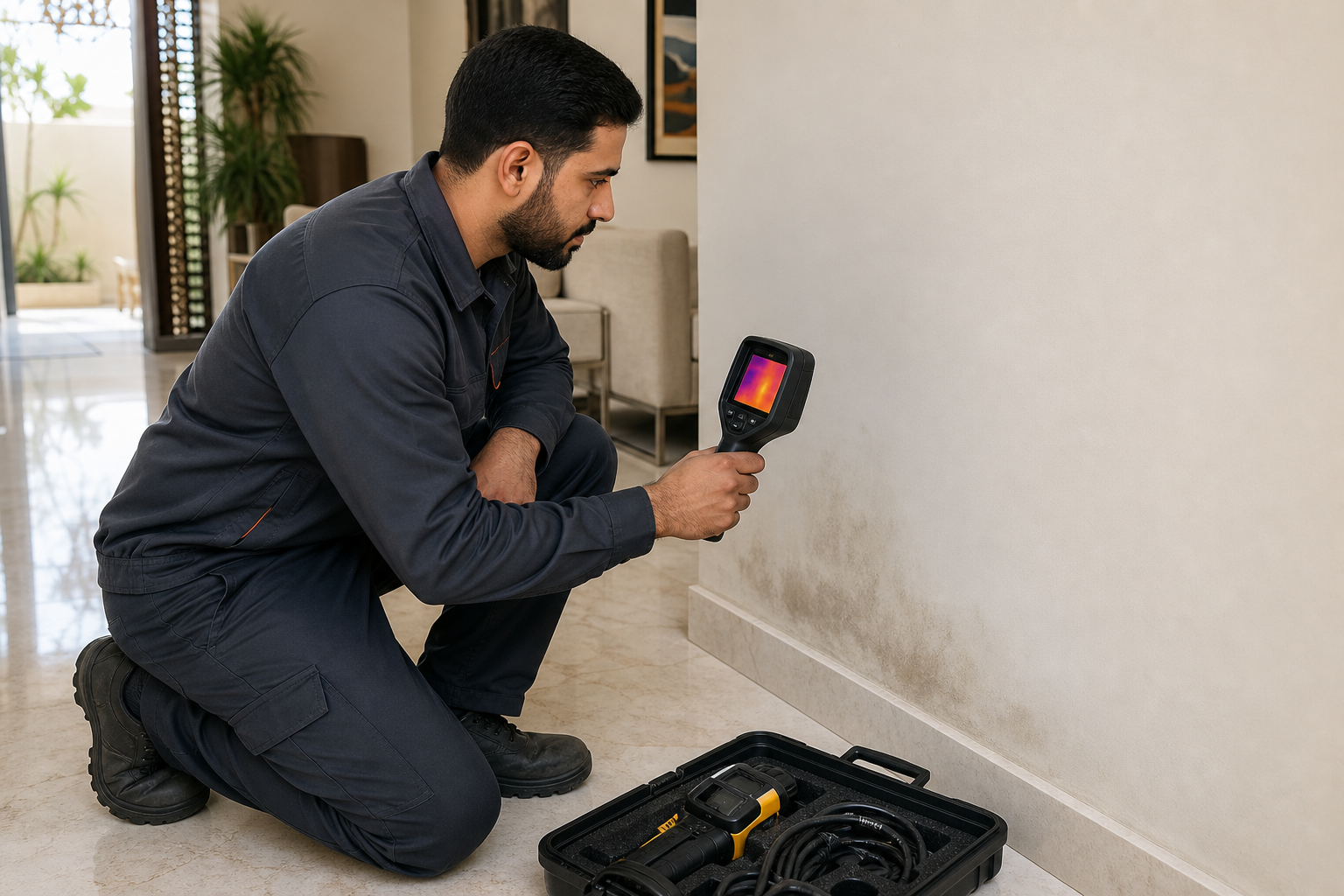
ليس كل أنبوب مسرب يترك بركة ماء واضحة. فقد يتسرب الماء خلف جدار، أو تحت أرضية، أو فوق سقف، أو حول تمديدات الحمام، أو من وصلة خزان أو مضخة أو سخان.
قد يبدأ التسرب المخفي كعطل سباكة صغير، لكن الرطوبة يمكن أن تمتد إلى التشطيبات والخزائن والأسقف والتجهيزات الكهربائية والغرف المجاورة. الاكتشاف المبكر يجعل الإصلاح عادةً أكثر دقة ويقلل الإزعاج غير الضروري.
إليك تسع علامات شائعة قد تعني أنك بحاجة إلى كشف تسربات المياه المخفية في الرياض.
1. ارتفاع غير مبرر في استهلاك المياه
ارتفاع فاتورة المياه أو استهلاك غير معتاد قد يدل على وجود تسرب، خصوصاً إذا لم يتغير عدد سكان المنزل ولا نمط الاستخدام المعتاد.
قارن الاستهلاك الأخير بنمطك المعتاد. وتذكر أن الري وتعبئة الخزان والضيوف والتنظيف والعادات الموسمية قد تغير الاستهلاك أيضاً، لذا يبقى الارتفاع علامة تحذيرية وليس دليلاً قاطعاً بحد ذاته.
2. عداد المياه يتحرك وكل شيء مغلق
عندما تكون جميع الصنابير والمراحيض والغسالات وسخانات المياه ونقاط الري والأجهزة المستهلكة للمياه مغلقة، فإن استمرار حركة عداد المياه قد يعني أن الماء لا يزال يتدفق في مكان ما.
افحص العداد فقط عندما يكون الوصول إليه آمناً وتعرف أي عداد يخدم العقار. ولا تفتح تجهيزات شركة المياه ولا تعبث بالأختام.
3. بقع رطوبة على الجدران أو الأسقف
قد تبدو بقعة الرطوبة أغمق من الدهان أو اللياسة المحيطة بها. وقد تتوسع ببطء، أو تعود بعد جفافها، أو تصبح أوضح بعد استخدام الحمام أو المطبخ أو الخزان أو السخان.
البقعة الظاهرة ليست دائماً أسفل التسرب مباشرة؛ فالماء قد ينتقل على طول أنبوب أو بلاطة أو جسر أو سقف قبل أن يظهر.
4. تقشر الدهان أو انتفاخ التشطيبات أو الخشب
الرطوبة خلف التشطيب قد تسبب انتفاخ الدهان على شكل فقاعات، أو تقشر ورق الجدران، أو ليونة اللياسة، أو انتفاخ الخزائن والأبواب.
لا تكتفِ بإعادة الدهان. يجب العثور على مصدر الرطوبة وإصلاحه أولاً، ثم ترك المواد المتضررة حتى تجف تماماً.
5. رائحة عفن مستمرة
رائحة العفن أو الرطوبة في الحمام أو المطبخ أو غرفة التخزين أو الممر أو داخل الخزائن قد تدل على رطوبة محتبسة، حتى لو بدا السطح جافاً.
افحص أسفل الأحواض وحول المراحيض وخلف الأجهزة وقرب سخانات المياه وحول فتحات الصيانة. وتجنب إغلاق المنطقة بالسيليكون أو المعجون قبل معرفة مصدر التسرب الفعلي.
6. ضعف ضغط المياه أو تذبذبه
قد يساهم التسرب في ضعف ضغط المياه، لكن مشاكل الضغط قد تأتي أيضاً من المضخة أو منسوب الخزان أو محبس أو فلتر أو انسداد أو مشكلة في خط التغذية.
لاحظ ما إذا كان انخفاض الضغط يؤثر على صنبور واحد أو طابق واحد أو العقار كله؛ فهذه المعلومة تساعد في التمييز بين مشكلة موضعية في التوصيلات ومشكلة أوسع في النظام.
7. صوت مياه والصنابير مغلقة
صوت هسهسة خافت أو خرير أو جريان ماء خلف جدار أو تحت أرضية قد يشير إلى تسرب مخفي.
تأكد أولاً من أن المراحيض والخزانات والمضخات والغسالات وتمديدات الجيران لا تعمل. فإذا استمر الصوت، رتب فحصاً بدلاً من كسر الجدار اعتماداً على الصوت وحده.
8. مضخة المياه تعمل أكثر من المعتاد
المضخة التي تعمل وتتوقف بشكل متكرر دون استخدام للمياه قد تكون تستجيب لفقدان الضغط. وقد يكون السبب تسرباً، أو عطلاً في صمام عدم الرجوع، أو مفتاح الضغط، أو وصلة الخزان، أو خللاً آخر في نظام الضخ.
كما أن التشغيل المتكرر يرهق المضخة بلا داعٍ. فحص السباكة ونظام المضخة يمكن أن يحدد ما إذا كانت المشكلة في التمديدات أو في معدات التحكم.
9. رطوبة حول سخان المياه أو الخزان أو المحابس أو وصلات الأنابيب
غالباً ما تبدأ التسربات الصغيرة عند الوصلات. ابحث عن قطرات ماء أو آثار صدأ أو ترسبات كلسية أو عزل مبلل أو تآكل أو رطوبة حول المحابس والتوصيلات.
وجود الماء قرب سخان كهربائي أو مضخة أو فيش أو مفتاح أو كيبل يستدعي حذراً إضافياً. لا تلمس أي معدات كهربائية مبللة؛ اعزل المنطقة واطلب مساعدة مختص.
الأسباب الشائعة للتسربات المخفية
قد تنشأ التسربات المخفية من:
- وصلات أنابيب مرتخية أو متهالكة
- أنابيب متآكلة أو متضررة
- خلاطات وتوصيلات أدوات صحية غير محكمة الإغلاق
- محابس زاوية أو ليّات تغذية مرنة تالفة
- وصلات سخان المياه أو تلف داخلي في جسم السخان
- مشاكل في المضخة أو مفتاح الضغط أو نظام الخزان
- خطوط صرف أو سيفونات متشققة
- عيوب في العزل المائي للحمام أو المطبخ
- ضرر عرضي أثناء الحفر أو أعمال الترميم
- إصلاحات سابقة لم تُختبر تحت الضغط بشكل صحيح
معرفة السبب الحقيقي مهمة، لأن أكثر نقطة مبللة ظاهرة قد لا تكون مصدر التسرب.
ماذا تفعل عند الاشتباه بتسرب مخفي
أوقف استهلاك المياه غير الضروري
أوقف الغسالات والري وتعبئة الخزان وبقية الأجهزة المستهلكة للمياه؛ فهذا يسهّل عليك ملاحظة ما إذا كانت المشكلة مستمرة.
اعزل التسرب النشط
إذا كان الماء ينتشر أو الضغط ينخفض بسرعة، أغلق أقرب محبس آمن أو محبس التغذية الرئيسي. ولا تستخدم القوة مع محبس عالق.
احمِ ممتلكاتك
أبعد الأثاث والأجهزة الإلكترونية والمستندات والأغراض المخزنة عن الجدران والأرضيات والأسقف الرطبة.
وثّق الأدلة
التقط صوراً للبقع وقراءات العداد وسلوك المضخة والتوصيلات الظاهرة. وسجّل متى تظهر الرطوبة وأي الأدوات استُخدمت قبل ظهورها.
لا تكسر البلاط أو الجدران دون تشخيص
فتح المنطقة الخاطئة يزيد تكلفة الإصلاح والإزعاج. يجب أن يسبق ذلك فحص دقيق يحدد الموضع أولاً.
كيف يتم كشف التسربات احترافياً
تعتمد الطريقة الدقيقة على العقار ونظام السباكة. قد يقوم الفني بما يلي:
- مناقشة متى وأين تظهر العلامات.
- فحص الأدوات الظاهرة والمحابس والسخانات والمضخات والخزانات ومسارات الأنابيب.
- مراقبة سلوك عداد المياه وضغط النظام.
- عزل أقسام شبكة المياه قسماً بعد قسم.
- استخدام أجهزة الكشف المناسبة لحصر المصدر المحتمل.
- فتح أصغر منطقة وصول ممكنة عند الحاجة إلى إصلاح فعلي.
- إصلاح الجزء المتضرر أو استبداله.
- إعادة اختبار الخط والتأكد من عدم استمرار الرطوبة.
لا توجد طريقة كشف تُغني عن خبرة الفني وحكمه؛ فالأجهزة تدعم الفحص المنطقي ولا تحل محله.
الإصلاح أم الاستبدال: أيهما أفضل؟
العطل الموضعي الصغير قد يحتاج فقط إلى إحكام وصلة، أو استبدال محبس، أو إعادة عمل وصلة، أو إصلاح جزء قصير من الأنبوب. أما التآكل الواسع، أو التسربات المتكررة، أو نوعية الأنابيب غير المناسبة، أو الخطوط المتضررة التي يصعب الوصول إليها، فقد تبرر استبدالاً جزئياً أو أوسع.
عرض السعر الواضح يجب أن يوضح الإصلاح الفوري، وأي أعمال وقائية اختيارية، وما إذا كان ترميم الجدران أو البلاط أو الأسقف أو الخزائن مشمولاً.
كيف تقلل خطر التسربات مستقبلاً
افحص المحابس الظاهرة والليّات ووصلات المضخة وتوصيلات سخان المياه بشكل دوري. وأصلح الصنابير التي تقطر والمراحيض التي لا يتوقف فيها الماء. وحافظ على عمل فائض الخزان وعوامته. ولا تتجاهل تكرار تشغيل المضخة أو تغيرات الضغط المفاجئة. وصوّر مسارات الأنابيب قبل إغلاق الجدران أو الأرضيات أثناء الترميم.
وبالنسبة للعقارات المؤجرة والمحلات والمكاتب والمباني، تساعد فحوصات السباكة المجدولة على اكتشاف الأعطال الصغيرة قبل أن تعطل الساكنين أو النشاط التجاري.
الأسئلة الشائعة
هل يمكن أن يرفع التسرب المخفي فاتورة المياه؟
نعم. الماء المتسرب باستمرار يرفع الاستهلاك، مع أن تغير الاستخدام المنزلي المعتاد قد يؤثر على الفاتورة أيضاً. تساعد فحوصات العداد والضغط على تأكيد احتمال وجود تسرب.
هل يمكن كشف التسرب دون تكسير الجدار؟
غالباً يمكن حصر المنطقة المحتملة قبل فتح أي سطح. ومع ذلك، قد يتطلب الإصلاح الفعلي الوصول إلى الأنبوب المتضرر. واحذر من الوعود بكشف دون أي تكسير في جميع الحالات.
لماذا يصبح جداري رطباً بعد استخدام الدش فقط؟
قد يكون المصدر أنبوب تغذية، أو وصلة خلاط، أو مصرفاً، أو مانع تسرب، أو طبقة العزل المائي، أو تجهيزاً قريباً. توقيت ظهور الرطوبة يساعد في توجيه الفحص.
هل يمكن إصلاح سخان مياه يسرّب؟
بعض التسربات تأتي من المحابس أو الوصلات ويمكن إصلاحها. أما جسم السخان المتضرر أو المتآكل فقد يحتاج إلى استبدال. يجب عزل السخان وفحصه قبل اتخاذ القرار.
ماذا أفعل إذا كان التسرب قريباً من الكهرباء؟
ابتعد عن الأفياش والمفاتيح والأجهزة والمضخات والسخانات والأسلاك المبللة. ولا تدخل في الماء الراكد للوصول إلى مفاتيح الكهرباء. اطلب مساعدة منسقة تجمع بين الكهرباء والسباكة.
تحتاج كشف تسربات المياه في الرياض؟
إذا كانت لديك جدران رطبة، أو استهلاك مياه غير مبرر، أو ضغط ضعيف، أو مضخة تعمل بشكل متكرر، أو رطوبة حول سخان أو خزان، تواصل مع سباك كهربائي. شارك موقعك في الرياض مع صور والعلامات التي لاحظتها ليستعد الفريق لفحص مركز.
 سباك وكهربائي طوارئ في الرياض: ماذا تفعل؟
 لماذا يفصل قاطع الكهرباء لديك باستمرار في الرياض