 لماذا يفصل قاطع الكهرباء عندي باستمرار؟ سبعة أسباب شائعة في منازل الرياض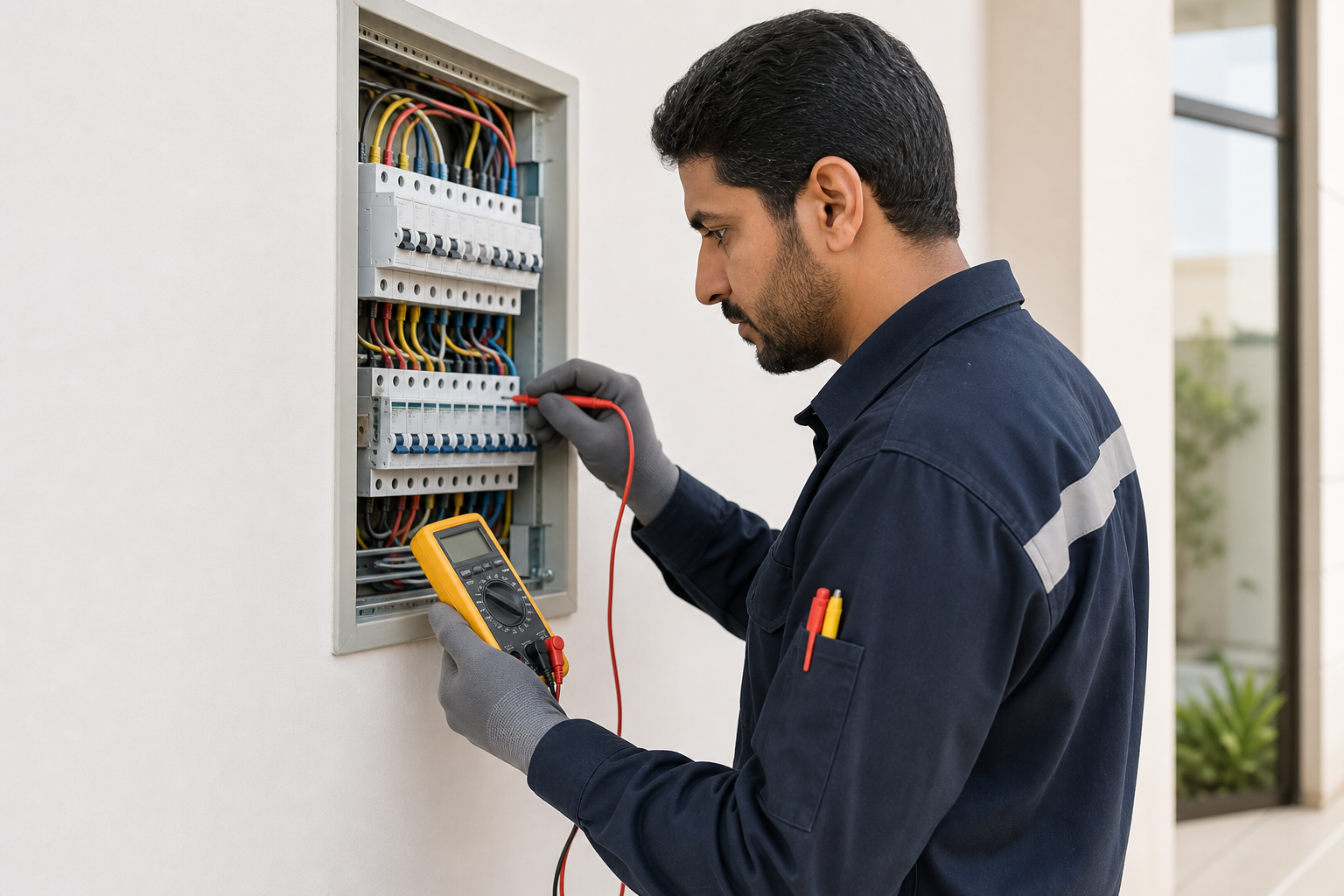
القاطع الكهربائي الذي يفصل مرة واحدة قد يكون استجاب لمشكلة عابرة. أما القاطع الذي يفصل مراراً وتكراراً فهو يخبرك أن هناك شيئاً يحتاج إلى انتباه.
قد تكون المشكلة دائرة محمّلة بأكثر من طاقتها، أو جهازاً معطوباً، أو أسلاكاً تالفة، أو رطوبة، أو تسريباً أرضياً، أو خللاً داخل لوحة الكهرباء نفسها. إعادة تشغيل القاطع دون معرفة السبب قد تترك المنزل بلا كهرباء، وقد تزيد من خطر الأضرار.
إليك سبعة أسباب شائعة تجعل قاطع الكهرباء يفصل باستمرار، والخطوات الآمنة التي عليك اتباعها قبل حجز خدمة كشف الأعطال الكهربائية في الرياض.
ما وظيفة القاطع الكهربائي؟
صُمم القاطع الكهربائي لقطع التيار عندما يرصد حالة خارج نطاق التشغيل الآمن للدائرة. فهو يحمي الأسلاك والأجهزة الموصولة بها عن طريق فصل الدائرة.
القاطع في الغالب ليس هو السبب الجذري لكل فصل؛ فقد يكون يتفاعل بشكل صحيح مع عطل في مكان آخر. ولهذا فإن استبدال القاطع دون فحص الدائرة قد لا يحل المشكلة أصلاً.
1. أجهزة كثيرة عالية الاستهلاك على دائرة واحدة
قد تتحمّل الدائرة حملاً زائداً عندما تعمل عدة أجهزة في الوقت نفسه. يحدث هذا كثيراً في المطابخ وغرف الغسيل والورش والمكاتب، أو في الغرف التي تُستخدم فيها وصلات كهربائية (مشتركات) لعدة أجهزة معاً.
قد يفصل القاطع عند تشغيل مجموعة معينة من الأجهزة معاً. فمثلاً قد لا تظهر المشكلة إلا عندما يعمل الفرن أو الغلاية أو الغسالة أو السخان أو أي جهاز عالي الاستهلاك مع جهاز آخر على الدائرة نفسها.
يستطيع الكهربائي قياس الحمل، وتحديد الأفياش التي تتشارك الدائرة الواحدة، ومعرفة ما إذا كان يجب إعادة توزيع الأجهزة أو تمديد دائرة مستقلة.
2. جهاز كهربائي معطوب
الجهاز التالف قد يفصل القاطع حتى لو كانت التمديدات الثابتة بحالة جيدة.
لاحظ ما إذا كان الفصل يحدث مباشرة بعد توصيل جهاز معين أو تشغيله. من العلامات الشائعة: رائحة غير معتادة، أو فيشة تالفة، أو حرارة، أو صوت طنين، أو تلف ظاهر في السلك، أو جهاز نُقل مؤخراً أو أُصلح أو تعرض للماء.
افصل الجهاز المشتبه به من الكهرباء ولا تستخدمه حتى يتم فحصه، ولا تستمر في تجربة جهاز يفصل الدائرة مرة بعد مرة.
3. التماس كهربائي
يحدث التماس الكهربائي عندما تتلامس الموصلات بطريقة تسمح بمرور تيار عالٍ جداً. وقد يفصل القاطع فوراً عند استخدام مفتاح أو فيشة أو إضاءة أو جهاز.
من علامات التحذير المحتملة: صوت فرقعة حاد، أو شرارة، أو أثر احتراق، أو رائحة حريق، أو فصل يحدث مباشرة بعد إعادة التشغيل.
التماس الكهربائي يتطلب فحصاً متخصصاً. لا تفتح الأفياش أو علب التوصيل إلا إذا كنت مدرباً ومصرحاً لك بأعمال الكهرباء.
4. تسريب أرضي أو خلل متعلق بالتأريض
قد يتسرب التيار خارج مساره المخصص بسبب تلف العازل، أو جهاز معطوب، أو معدات مبللة، أو خلل آخر. وقد تفصل أجهزة الحماية الدائرة لتقليل الخطر.
مشاكل التسريب الأرضي قد تكون متقطعة؛ فقد تفصل الكهرباء فقط أثناء المطر، أو بعد التنظيف، أو عند تشغيل المضخة، أو عند عمل سخان المياه، أو عندما تسخن المعدات.
الفني المؤهل يستطيع فحص العزل والتسريب وأجهزة الحماية والتأريض بأجهزة قياس دقيقة، بدلاً من الاعتماد على النظر وحده.
5. رطوبة قرب التمديدات الكهربائية
الماء والكهرباء مزيج خطير. فالتسربات من الأنابيب أو تصريف المكيفات أو الأسطح أو الحمامات أو المطابخ أو سخانات المياه أو المضخات أو الخزانات قد تصل إلى الأفياش والمفاتيح والإضاءة والأسلاك ولوحات الكهرباء.
إذا فصلت الدائرة بعد مطر أو تسرب سباكة أو غسيل أو استخدام سخان المياه، فاترك الدائرة المتأثرة مفصولة. لا تلمس أي معدات كهربائية مبللة ولا تدخل في ماء متجمع للوصول إلى مفتاح.
يجب تحديد مصدر الماء والضرر الكهربائي معاً قبل إعادة الدائرة إلى الاستخدام الطبيعي.
6. أسلاك مرتخية أو محمومة أو تالفة
قد ترتخي التوصيلات مع الوقت، ويتدهور العازل، وتتضرر الكابلات بسبب الحرارة أو القِدم أو الحفر والتثقيب أو الحشرات والقوارض أو إصلاحات سابقة رديئة أو الاستخدام فوق الطاقة.
من العلامات المحتملة:
- ارتعاش الإضاءة أو خفوتها
- صوت طنين أو فرقعة
- مفاتيح أو أفياش دافئة
- تغيّر اللون
- رائحة احتراق
- انقطاع متقطع للكهرباء
- قاطع يفصل بدون نمط واضح مرتبط بجهاز معين
هذه الأعراض تستدعي الفحص. تجنّب استخدام النقاط المتأثرة حتى يتم التأكد من السبب.
7. قاطع معطوب أو مشكلة في لوحة الكهرباء
القواطع ومكوّنات لوحة الكهرباء قد تتآكل أو تتضرر أو تكون مختارة بشكل غير مناسب من الأساس. وقد تنشأ المشاكل أيضاً من توصيلات ضعيفة، أو ضرر حراري، أو صدأ، أو توزيع دوائر محمّل فوق طاقته، أو تعديلات سابقة.
لا يجوز أبداً استبدال القاطع بآخر ذي قدرة أعلى لمجرد إيقاف الفصل. فيجب تقييم مقاس الكابل وتصميم الدائرة والحمل الموصول ومتطلبات الحماية معاً.
فحوصات آمنة يمكنك القيام بها
يمكنك جمع معلومات مفيدة دون فتح لوحة الكهرباء.
سجّل بدقة متى يحدث الفصل
دوّن ما يلي:
- أي قاطع هو الذي يفصل
- أي غرفة أو أجهزة تنقطع عنها الكهرباء
- ما الذي كان يعمل وقت الفصل
- هل يحدث الفصل فوراً أم بعد فترة
- هل يحدث أثناء المطر أو التنظيف أو تشغيل سخان المياه
- هل لاحظت حرارة أو رائحة أو صوتاً أو شرراً
هذا النمط يمكن أن يختصر وقت التشخيص كثيراً.
افصل الأجهزة المستخدمة مؤخراً
إذا لم تكن هناك علامات خطر، افصل الأجهزة الموصولة بالدائرة المتأثرة. محاولة إعادة تشغيل واحدة قد تساعد في معرفة ما إذا كانت المشكلة من جهاز معين.
إذا فصل القاطع مرة أخرى، فاتركه مفصولاً.
تأكد هل المشكلة في منزلك فقط
الانقطاع الأوسع قد يكون مشكلة في التغذية الكهربائية وليس عطلاً داخلياً. تحقق مما إذا كانت المناطق المشتركة أو المنازل المجاورة لديها كهرباء. ولا تعبث بالعداد أو معدات التغذية الرئيسية.
لا تفك غطاء لوحة الكهرباء
قد يظل داخل لوحة الكهرباء خطراً حتى عندما تبدو القواطع الفردية مفصولة. اترك الفحص والإصلاح لكهربائي مدرب.
متى يكون الفصل المتكرر حالة طارئة؟
اطلب مساعدة عاجلة عندما يترافق الفصل مع أي مما يلي:
- دخان أو رائحة احتراق
- شرر أو صوت فرقعة
- حرارة في فيشة أو مفتاح أو جهاز أو لوحة
- ماء قرب المعدات الكهربائية
- اسوداد ظاهر أو بلاستيك منصهر
- شعور بصعقة أو تنميل عند لمس معدات معدنية
- انقطاع الكهرباء عن أجهزة أساسية
- قاطع لا يثبت في وضع التشغيل حتى بعد فصل الأجهزة
إذا كان هناك دخان أو حريق، فاجعل الإخلاء أولويتك وتواصل مع جهة الطوارئ المختصة. ولا تستخدم الماء أبداً على معدات كهربائية موصولة بالتيار.
كيف يشخّص الكهربائي العطل
الفحص السليم قد يشمل:
- التأكد من الدائرة المتأثرة
- فحص اللوحة والقاطع والكابلات والأفياش والأجهزة الموصولة
- قياس حمل الدائرة
- فحص العزل والتسريب الأرضي
- التحقق من التأريض وأجهزة الحماية
- عزل أجزاء من الدائرة لتحديد موضع العطل
- فحص الأجهزة عند الحاجة
- إصلاح الأسلاك أو التجهيزات التالفة
- استبدال القاطع المعطوب بنوع وقدرة صحيحين
- اختبار الدائرة بعد الإصلاح في ظروف التشغيل العادية
الإصلاح الصحيح يعتمد على نتائج الفحص. فالهدف ليس مجرد إبقاء القاطع في وضع التشغيل، بل جعل الدائرة آمنة وموثوقة.
كيف تقلل من فصل القاطع مستقبلاً
تجنّب توصيل عدة أجهزة عالية الاستهلاك على وصلة كهربائية واحدة. استبدل الفيش والأسلاك التالفة. حافظ على جفاف التجهيزات الكهربائية. ولا تتجاهل ارتعاش الإضاءة أو الطنين أو الحرارة أو الفصل المتكرر. واحرص على إجراء فحص بعد أي أضرار مياه أو تعديلات كهربائية نفذها أشخاص غير مؤهلين.
وللمكاتب والمحلات والفلل والمباني التي يتزايد فيها استهلاك الكهرباء، يمكن أن تكشف الصيانة الدورية المخططة الدوائر المحمّلة فوق طاقتها والمكوّنات المتقادمة قبل أن تسبب أي انقطاع.
الأسئلة الشائعة
لماذا يفصل القاطع عند تشغيل المكيف أو الفرن؟
تشغيل جهاز عالي الاستهلاك قد يكشف عن حمل زائد على الدائرة، أو عطل في الجهاز، أو توصيلة ضعيفة، أو توزيع دوائر غير مناسب. يلزم الفحص لتحديد السبب بدقة.
هل من الآمن الاستمرار في إعادة تشغيل القاطع؟
لا. إعادة التشغيل المتكررة دون تشخيص العطل قد تكون غير آمنة. إذا لم تحل المحاولة الأولى المشكلة، فاترك الدائرة مفصولة واحجز فحصاً.
هل يمكن أن يسبب تسرب المياه فصل الكهرباء؟
نعم. الرطوبة قد تؤثر على الأسلاك والمفاتيح والأفياش والأجهزة والمضخات والسخانات وأجهزة الحماية. ابتعد عن المنطقة الكهربائية المبللة واطلب فحصاً كهربائياً وفحص سباكة معاً.
هل يحتاج القاطع الذي يفصل إلى استبدال دائماً؟
لا. فقد يكون القاطع يستجيب بشكل صحيح لحمل زائد أو عطل في مكان آخر. يجب فحص الدائرة والأجهزة الموصولة بها قبل أي استبدال.
هل يصلح سباك كهربائي لوحات الكهرباء والأعطال الكهربائية؟
تشمل خدمات سباك كهربائي المعلنة: كشف الأعطال الكهربائية، وإصلاح القواطع ولوحات الكهرباء، وإصلاح فصل الكهرباء المتكرر، وإصلاح التماس الكهربائي، وأعمال التمديدات، والفحوصات الوقائية في جميع أنحاء الرياض.
تحتاج إصلاح قاطع أو عطل كهربائي في الرياض؟
إذا كان القاطع عندك يفصل باستمرار، فلا تستمر في إرجاعه بالقوة. تواصل مع سباك كهربائي وأخبرنا بموقعك والغرف أو الأجهزة المتأثرة وأي علامات تحذير لاحظتها. الفحص المنهجي يحدد السبب ويعيد الكهرباء بأمان.
 سباك وكهربائي طوارئ في الرياض: ماذا تفعل؟
 كشف تسربات المياه المخفية في الرياض: 9 علامات تحذيرية