 سباك أو كهربائي طوارئ في الرياض؟ ماذا تفعل قبل وصول المساعدة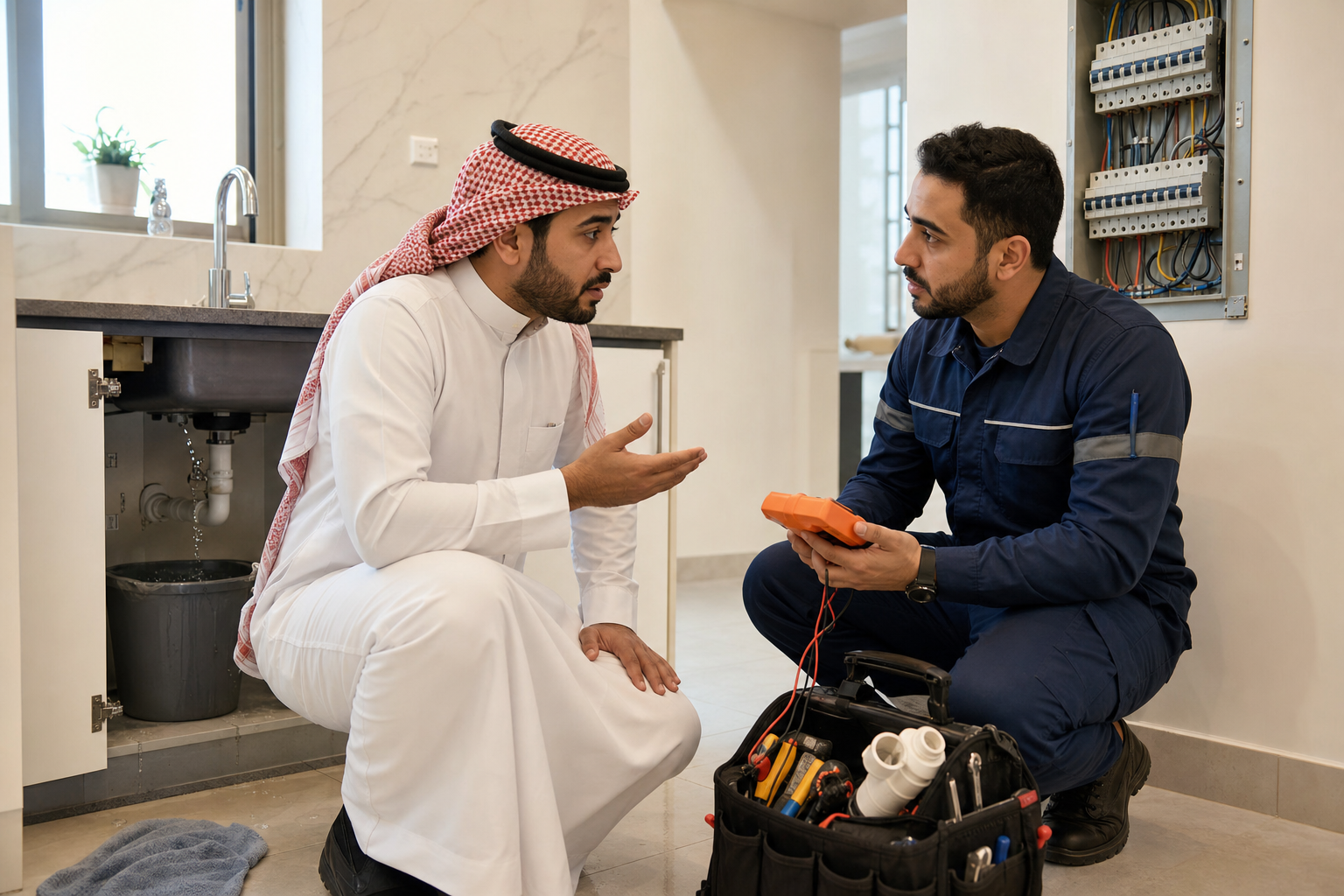
انفجار أنبوب، أو مجارٍ طافحة، أو فصل متكرر في قاطع الكهرباء، أو رائحة احتراق، أو انقطاع مفاجئ للكهرباء — أي منها كفيل بتحويل يوم عادي إلى حالة طوارئ. الدقائق الأولى مهمة فعلاً، لكن التسرع في إصلاح خطير قد يزيد المشكلة سوءاً.
يشرح هذا الدليل الخطوات الآمنة والعملية التي تقوم بها أثناء انتظار سباك أو كهربائي طوارئ في الرياض. كما يساعدك على تحديد ما إذا كانت المشكلة في السباكة أو الكهرباء أو في الاثنين معاً.
أولاً: حدّد نوع الحالة الطارئة
بعض المشاكل يسهل تصنيفها. المياه الخارجة من أنبوب مشكلة سباكة غالباً، والشرر الخارج من فيش الكهرباء مشكلة كهربائية بوضوح. لكن هناك حالات تجمع بين النظامين وتحتاج حذراً إضافياً.
قد تحتاج سباك طوارئ عندما يكون لديك:
- أنبوب منفجر أو يسرّب بغزارة
- مياه تنتشر على الأرضية أو تتسرب من السقف
- مرحاض أو مصرف أرضي يطفح
- انسداد في خط المجاري الرئيسي يؤثر على أكثر من نقطة
- تسرب من سخان المياه أو المضخة أو توصيلات الخزان
- هبوط مفاجئ في ضغط المياه مرتبط بتسرب
وقد تحتاج كهربائي طوارئ عندما تلاحظ:
- فصلاً متكرراً في قاطع الكهرباء
- رائحة احتراق قرب فيش أو مفتاح أو جهاز أو لوحة الكهرباء
- شرراً أو أزيزاً أو حرارة أو تغيّر لون حول التوصيلات الكهربائية
- انقطاعاً جزئياً أو كاملاً للكهرباء داخل العقار
- ارتعاش الإضاءة في أكثر من غرفة
- جهازاً يتسبب في فصل الكهرباء عند تشغيله
وقد تحتاج التخصصين معاً عندما تتسرب المياه قرب الأفياش أو الأسلاك أو الأجهزة أو لوحة الكهرباء أو سخان المياه أو نظام التحكم بالمضخة.
ماذا تفعل عند تسرب مياه كبير
1. أوقف المياه إن استطعت ذلك بأمان
أغلق أقرب محبس عزل إذا كان التسرب محصوراً في نقطة واحدة، مثل المرحاض أو المغسلة أو الخلاط أو سخان المياه. وإن لم تعرف مكان المحبس الفرعي، أغلق محبس المياه الرئيسي للعقار.
لا تستخدم القوة مع محبس عالق أو متآكل بشدة. المحبس التالف قد ينكسر ويسبب تسرباً أكبر.
2. احمِ المنطقة المحيطة
أبعد الأثاث والأجهزة الإلكترونية والسجاد والمستندات وكل ما هو ثمين عن المياه. استخدم الدلاء أو المناشف للحد من انتشارها، لكن لا تدخل أبداً منطقة قد تكون المياه فيها ملامسة للكهرباء.
3. تجنب الإصلاحات المؤقتة العنيفة
اللاصق والمرابط المرتجلة قد تبطئ تنقيطاً بسيطاً، لكنها ليست حلاً يعتمد عليه لأنبوب مضغوط أو تالف. لا تقطع أو ترخِ أو تفك أي توصيلات والنظام ما زال تحت الضغط.
4. صوّر التسرب
التقط صوراً واضحة أو مقطع فيديو قصيراً يوضح مصدر المياه وسرعة انتشارها. هذا يساعد فريق السباكة على إحضار الأدوات وقطع الغيار المناسبة من أول زيارة.
ماذا تفعل عندما تطفح المجاري
توقف عن استخدام المغسلة أو المرحاض أو الدش أو المصرف الأرضي المتأثر. وإذا كانت عدة مصارف بطيئة أو ترجع المياه، تجنب فتح المياه في أي مكان بالعقار لأن الانسداد قد يكون في خط مشترك.
لا تكرر شطف مرحاض يطفح. وتجنب خلط مواد تسليك المجاري الكيميائية، فالمنتجات المختلفة قد تتفاعل بشكل خطير وتجعل التسليك الاحترافي أصعب.
أخبر الفني بالنقاط المتأثرة، ومتى بدأت المشكلة، وهل سمعت أصوات قرقرة أو لاحظت بطئاً في التصريف قبل الطفح.
ماذا تفعل عندما تفصل الكهرباء باستمرار
قاطع الكهرباء يفصل عادةً ليقطع وضعاً كهربائياً غير آمن. فلا تستمر في إعادة رفعه مرة بعد مرة.
إذا لم يكن هناك دخان أو رائحة احتراق أو حرارة أو تلف ظاهر أو مياه قرب النظام الكهربائي، يمكنك فصل الأجهزة المستخدمة مؤخراً ومحاولة رفع القاطع مرة واحدة فقط. فإن فصل مجدداً، اتركه مطفأً ورتّب موعداً لفحص كهربائي.
لا تفك غطاء لوحة الكهرباء، ولا تلمس أسلاكاً مكشوفة، ولا تستبدل القاطع بنفسك، ولا تركب قاطعاً أكبر لإيقاف الفصل. السبب يجب أن يُشخّص لا أن يُتجاوز.
ماذا تفعل إذا شممت رائحة احتراق أو رأيت شرراً
تعامل مع رائحة الاحتراق أو الدخان أو الحرارة أو الشرر كحالة عاجلة.
- توقف عن استخدام الفيش أو المفتاح أو الجهاز أو الدائرة المتأثرة.
- افصل القاطع الرئيسي فقط إذا كان الوصول إليه آمناً.
- أبعد الجميع عن المنطقة.
- لا تسكب الماء على أي معدات كهربائية.
- إذا كان هناك حريق فعلي أو دخان كثيف، غادر العقار واتصل بجهة الطوارئ المختصة.
قد تبقى رائحة الاحتراق حتى بعد توقف العطل، فغياب اللهب الظاهر لا يعني أن النظام آمن للاستخدام.
ماذا تفعل عندما تقترب المياه من الكهرباء
هذه من أخطر حالات الطوارئ المنزلية على الإطلاق.
لا تخض في مياه راكدة للوصول إلى مفتاح أو فيش أو جهاز أو مضخة أو سخان مياه أو لوحة الكهرباء. ولا تلمس جدراناً مبللة أو قطعاً معدنية قد تكون مكهربة.
أبعد الجميع عن المنطقة وتواصل مع فريق يستطيع تنسيق عزل الكهرباء وإصلاح السباكة معاً. يجب تأمين الكهرباء أولاً قبل بدء أي عمل سباكة حول المعدات الكهربائية المتأثرة.
المعلومات التي ترسلها عند طلب مساعدة الطوارئ
رسالة واتساب واضحة توفر وقتاً ثميناً. أرسل فيها:
- اسمك والحي الذي تسكنه في الرياض
- نوع العقار: شقة أو فيلا أو مكتب أو محل أو مبنى
- وصفاً مختصراً للمشكلة
- متى بدأت المشكلة
- هل تم إغلاق المياه أو فصل الكهرباء
- صوراً أو مقطع فيديو قصيراً
- تعليمات المواقف أو البوابة أو المبنى أو الدخول
- هل يتأثر بالمشكلة أطفال أو كبار سن أو مستأجرون أو عملاء أو معدات
تجنب الاكتفاء بإرسال «عاجل» أو «تعالوا بسرعة». بضع تفاصيل دقيقة تساعد الفني على التجهز قبل أن ينطلق إليك.
ماذا يفترض أن يفعل فني الطوارئ؟
الزيارة الاحترافية تبدأ بالسلامة والتشخيص، لا بالتخمين. وبحسب المشكلة، قد يقوم الفني بما يلي:
- عزل خط المياه أو الدائرة الكهربائية المتأثرة
- فحص التلف الظاهر والمناطق المحيطة به
- اختبار الضغط أو الأسلاك أو القواطع أو التأريض أو التوصيلات أو الأجهزة
- شرح السبب المحتمل بلغة واضحة
- تقديم عرض سعر قبل البدء بأي إصلاح غير طارئ
- إصلاح الجزء التالف أو استبداله
- اختبار النظام بعد الإصلاح
- تنظيف منطقة العمل وشرح أي خطوات متابعة لازمة
وفي المشاكل المشتركة، مثل سخان مياه أو مضخة تسرّب ومعها عطل كهربائي، فإن تنسيق أعمال السباكة والكهرباء معاً يقلل التأخير ويمنع أن يتسبب إصلاح في مشكلة جديدة.
لماذا يفيدك فريق واحد للسباكة والكهرباء
كثير من عقارات الرياض تعتمد على أنظمة مترابطة. فسخانات المياه تحتاج توصيلات كهربائية آمنة وسباكة صحيحة. والمضخات تعمل بمحركات ومفاتيح أوتوماتيكية وخطوط مياه. والتسربات قد تصل إلى الأفياش أو الأسلاك. فريق واحد يفهم المجالين يستطيع تقييم المشكلة كاملة وترتيب العمل بالتسلسل الصحيح.
يقدم سباك كهربائي خدمات السباكة والكهرباء للمنازل والفلل والمحلات والمكاتب والمنشآت التجارية في جميع أنحاء الرياض. هدفنا تأمين العقار، وشرح المشكلة، وإتمام الإصلاح بأقل إزعاج ممكن.
الأسئلة الشائعة
هل تقدمون خدمة طوارئ سباكة وكهرباء ليلاً؟
قد يعلن موقع سباك كهربائي عن دعم الطوارئ، لكن ساعات العمل ونطاق الاستجابة الدقيقين يجب أن يطابقا التوفر الفعلي للشركة. تأكد من التوفر الحالي عبر الهاتف أو واتساب.
كم يستغرق وصول الفني إلى عقاري؟
وقت الوصول يعتمد على موقعك في الرياض، وحركة المرور، والحجوزات الحالية، وظروف الوصول، ونوع الحالة الطارئة. شارك اسم حيّك بالضبط وتفاصيل المشكلة لتحصل على تقدير واقعي.
هل أغلق محبس المياه الرئيسي أثناء التسرب؟
في التسرب الكبير أو الخارج عن السيطرة، إغلاق محبس المياه الرئيسي يقلل الأضرار. أما إذا كان التسرب محصوراً في نقطة واحدة والمحبس الفرعي سليماً وآمناً، فاكتفِ بإغلاقه.
هل يمكنني رفع القاطع بعد فصله؟
محاولة واحدة قد تكون مقبولة فقط إذا لم يكن هناك دخان أو رائحة احتراق أو حرارة أو مياه أو تلف ظاهر. فإن فصل مرة أخرى، اتركه مطفأً واتصل بكهربائي.
ماذا لو كان الأنبوب المسرّب قريباً من فيش كهرباء؟
لا تلمس الفيش أو المفتاح أو الجهاز أو المنطقة المبللة. أبعد الجميع عنها واطلب مساعدة كهربائية وسباكة معاً.
تحتاج مساعدة طارئة في الرياض؟
لأي تسرب عاجل أو انسداد أو فصل كهرباء أو عطل كهربائي أو مشكلة في سخان المياه أو المضخة، تواصل مع سباك كهربائي واشرح الوضع بوضوح. اتصل أو أرسل رسالة واتساب مع موقعك وصور المشكلة والخطوات التي قمت بها.
 لماذا يفصل قاطع الكهرباء عندك باستمرار في الرياض
 كشف تسربات المياه المخفية في الرياض: 9 علامات تحذيرية